How to turn sustainability practices into a competitive advantage


The Role of Industry Leaders
Stephen Ashkin
In our previous articles, we explored the core pillars of sustainable cleaning: business efficiency, health-focused practices, and energy conservation. We have seen how high-performance tools and non-toxic products reduce risks while lowering costs. In this article, we bring these concepts together by looking at the role of industry leadership and how adopting these practices provides a powerful competitive edge in 2026 and beyond.
1. Leading Through Innovation and Quality
Sustainability is not just a trend; it is a long-term commitment to doing more than the "bare minimum". Industry leaders serve as the bridge between complex new regulations and daily cleaning operations. By incorporating leading sustainable practices, a cleaning organization enriches its service quality and moves from being a simple vendor to a strategic health partner.
For Building Service Contractors (BSCs), this shift provides a major competitive advantage. When you use equipment designed for longevity and high filtration, you are not just cleaning a floor; you are managing a client's environment and protecting their building's value. Quality leadership means choosing tools that last 7 to 10 years rather than disposable machines that end up in landfills. This focus on durability reduces waste and ensures that the "Power" in "Our Power, Our Planet" is used responsibly.
2. Data-Driven Evidence for Business Improvement
Making the switch to sustainable practices is backed by significant data from organizations like the Environmental Protection Agency (EPA) and the Department of Energy (DOE). These organizations provide the evidence that "green" cleaning is actually better for the bottom line.
- Productivity and Labor Savings: According to industry data, switching from traditional uprights to high-performance backpack vacuums can improve cleaning speed by 3 to 5 times. Since labor is 80% to 90% of a cleaning budget, this efficiency is the fastest way to increase profitability.
- Health and Attendance (EPA): The EPA notes that indoor air can be 2 to 5 times more polluted than outdoor air. Using HEPA-filtered equipment to remove these pollutants reduces "Sick Building Syndrome," which is linked to lower absenteeism and higher occupant cognitive function.
- Energy and Carbon Footprint (DOE): The DOE highlights that high-efficiency equipment allows for faster cleaning cycles. This enables buildings to power down lights and HVAC systems earlier in the evening, leading to a significant reduction in a facility's total carbon footprint and lower utility bills.
3. The ProTeam Advantage: Success in Action
The ProTeam Advantage is found where efficiency meets satisfaction. When a facility adopts these solutions, the results are measurable in both time saved and the health of the occupants. ProTeam has spent decades perfecting the vacuum as a tool for "source removal."
Successful case studies show that organizations using ProTeam's high-filtration systems see a dramatic drop in dust re-distribution. By capturing 99.9% of particulates as small as 0.3 microns, these tools act as mobile air purification systems. This level of performance ensures that the "shiny" floor is matched by truly clean air. This results in higher client satisfaction, fewer complaints, and longer contract retention for service providers.
4. Case Study: Harvard Cleans for Health and Sustainability
One of the most notable examples of leadership in action is Harvard University. Managing a world-class campus requires a balance of extremely high standards and environmental responsibility. Harvard chose to move beyond traditional "visual" cleaning to embrace a total "Cleaning for Health" philosophy.
By integrating high-performance backpack vacuums and sustainable practices, Harvard achieved several key goals:
- Improved Indoor Air Quality: Using HEPA filtration ensured that fine dust and allergens were removed from the air, creating a healthier learning environment for students and faculty. This was a proactive step in protecting the university's human assets.
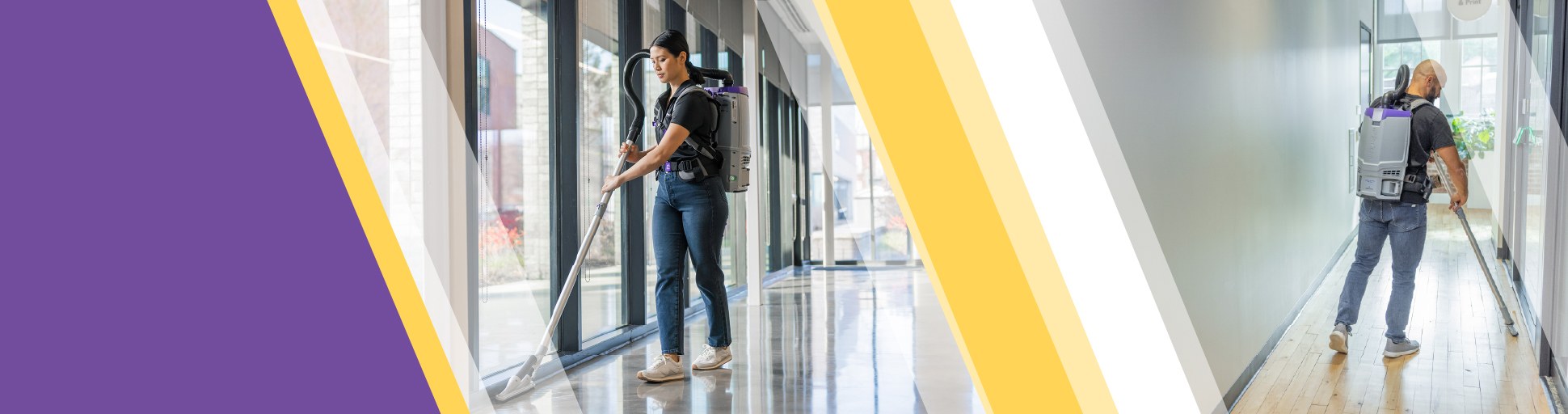
- Worker Safety and Retention: The switch to ergonomic backpack systems moved the weight of the equipment to the user's hips. This reduced the physical strain on the cleaning staff, lowering the risk of long-term injury and increasing employee morale.
- Operational Efficiency: The university proved that sustainability and high-performance go hand-in-hand. They were able to maintain their high standards while working more efficiently, showing that "green" does not mean "slow."
5. Risk Reduction as a Prevention Strategy
A key part of industry leadership is recognizing that nothing is 100% safe. The goal of a leader is to reduce the risk of harm through prevention. This involves the "Hierarchy of Risk Reduction":
- Eliminating Hazards: Switching to cordless equipment removes the #1 cause of cleaning-related accidents: power cords.
- Substituting Chemistry: Using independently “green certified” products prevents chemical sensitivities and protects the building's surfaces.
- Engineering Safety: Using advanced filtration ensures that the vacuum itself is a barrier between the worker and harmful dust.
By focusing on these preventative steps, leaders reduce their insurance costs and protect themselves from the liability of accidents or long-term health claims.
6. IAQ as a Governance Metric
In the modern era, "Governance" means being transparent with data. Building owners now use sensors to track air quality in real-time. Industry leaders embrace this by providing "clean air data" to their clients.
If a sensor shows that dust levels stay low during a cleaning shift, it proves the contractor is using high-quality equipment and following best practices. This level of transparency builds incredible trust. It transforms the cleaning crew from an "expense" into a vital part of the building's health and safety team.
7. The Economic Power of Healthy Buildings
Why do leaders invest so much in sustainability? Because health has a return on investment (ROI). When Indoor Air Quality (IAQ) is improved, productivity increases by 5% to 10%. In a large commercial office, a 5% boost in worker productivity is worth significantly more than the cost of the entire cleaning contract.
As a service provider, when you can speak the language of ROI, you are no longer a commodity service. You are a strategic health partner. This allows you to win business based on the value you provide to the building's occupants, rather than just being the lowest bidder.
8. Conclusion: Positioning for the Future
The move toward sustainability is the ultimate win-win for the cleaning industry. It reduces liability by using non-toxic products and cordless tools. It improves the lives of workers through better ergonomics. Most importantly, it positions your organization as a leader in a market that increasingly values health, safety, and environmental care.
As we conclude this series, remember that sustainable cleaning is about making a choice. By picking equipment that is high-performing, energy-efficient, and easy on the body, you are following the rules and creating a better future for everyone.